Maybe you’re not ready to sell today.
Maybe you’re just curious about what the last ten years of late-night emergency calls and tenant disputes are actually worth.
Or maybe you’re feeling the weight of the "owner-operator fatigue" and you just want to know there’s an exit ramp somewhere ahead.
One of the most common questions I get is: "What do I actually need to show a buyer to get a real number?"
It’s a valid question.
Most property management owners keep their "books" in a way that makes sense to them, but might look like a foreign language to an outside valuator.
Valuation isn't about looking at your bank balance.
It’s not about how much you think the business should be worth.
It’s about what the data can prove.
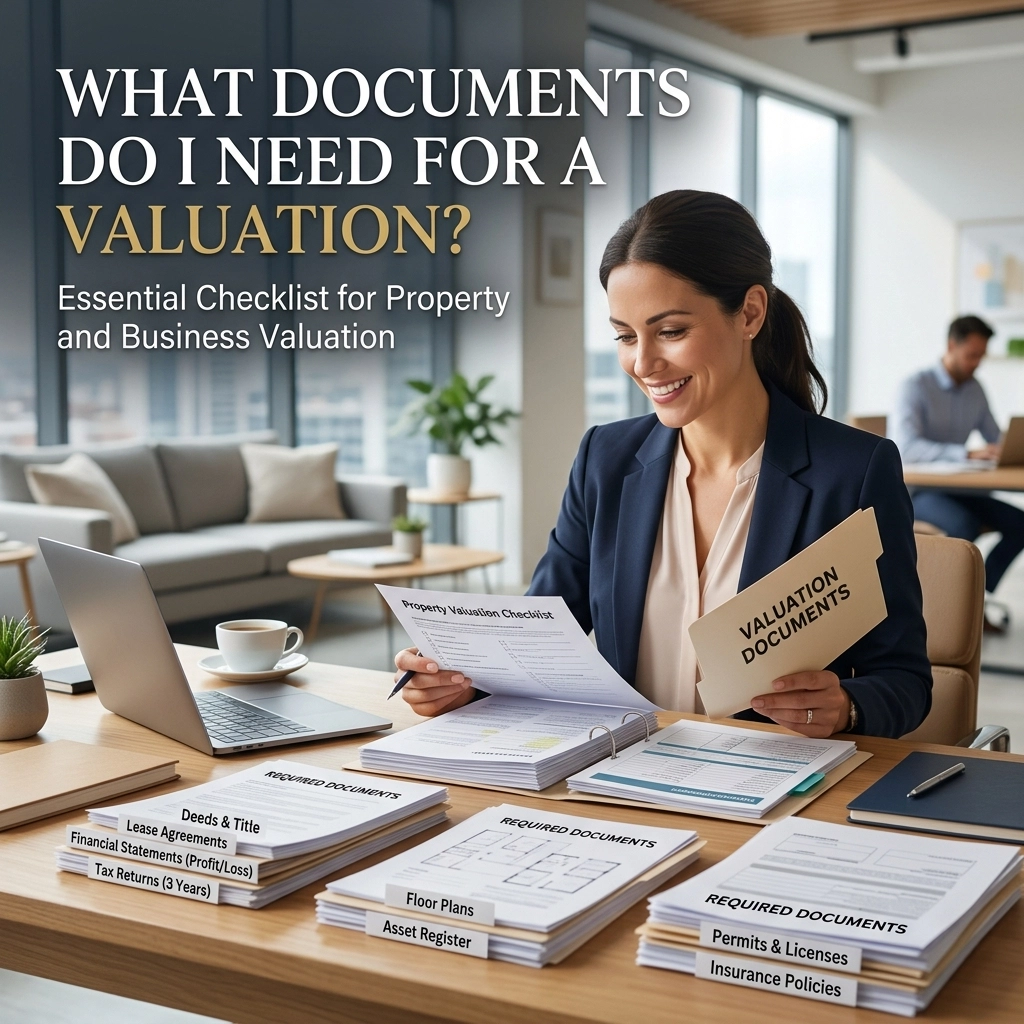
Let’s look at the specific documents you need to gather to get an accurate picture of your business value.
The Financial Foundation: Three Years of Truth
The first thing any broker or buyer is going to ask for is your financial history.
They aren't looking for a snapshot of last month. They are looking for a pattern.
Not a guess of what you'll do next year. But a record of what you did for the last three.
1. Profit and Loss Statements (P&Ls)
You’ll need these for the last three full calendar years, plus a Year-to-Date (YTD) statement for the current year.
Consistency is key here.
If your 2024 P&L looks completely different in structure than your 2025 P&L because you switched software or accountants, you’re going to have some explaining to do.
A buyer wants to see "normalized" financials. They want to see how the business performs once the "owner perks": like your personal car lease or that trip to Hawaii that you labeled a "conference": are stripped away.
2. Balance Sheets
While the P&L tells the story of your income, the balance sheet tells the story of your stability.
Do you have debt? Do you have clean escrow accounts?
In property management, the balance sheet is often overlooked by owners, but it’s the first place a sophisticated buyer looks to ensure the company isn't built on a foundation of liabilities.
3. Tax Returns
Federal tax returns for the last three years act as the "ultimate verification."
If your internal P&L says you made $500k in profit, but your tax return says you made $50k, we have a problem.
Buyers will always lean toward the tax return as the source of truth.

The Rent Roll: The Heart of the Valuation
In the property management world, your rent roll is your most valuable asset.
It is the engine that drives the entire machine.
Without a detailed, clean rent roll, a valuation is just a shot in the dark.
Not just a list of names. But a map of your recurring revenue.
When pulling your rent roll for a valuation, you need to include:
- Property Type: Is it a single-family home, a condo, or a multi-family unit?
- Monthly Management Fee: Is it a flat fee or a percentage?
- Ancillary Fees: Are you collecting lease renewal fees, late fees, or pet rent?
- Contract Start Date: How long has this owner been with you?
- Geographic Location: Are your doors clustered together or spread across three counties?
- Owner Concentration: Do you have one owner who owns 40% of your doors? (This is a huge risk factor that buyers will look for).
A buyer wants to see that you aren't reliant on one "whale" client who could sink your business if they decided to leave.
You can learn more about how these factors influence price in our guide on how much is a property management business worth.
The Legal Glue: Management Agreements
Your management agreements are the legal "deeds" to your business.
If you don't have signed, up-to-date contracts for every door on your rent roll, you don't technically have an asset to sell.
A valuator will want to see your "standard" agreement.
They are looking for specific clauses:
- Assignability: Can you sell these contracts to someone else without the owner’s written permission? If your contracts aren't assignable, your business value could drop significantly because a buyer doesn't want to "re-sell" every client on day one.
- Termination Clauses: How easily can an owner leave?
- Fee Structures: Are they uniform, or is every contract a "special deal" you made for a friend?
If you want to dive deeper into how these contracts impact your exit, check out how to sell a property management business without losing value.

Operational Records: The "Hidden" Value Drivers
Once the financials and the rent roll are settled, we look at the operational health of the business.
This is the "grease" in the machine.
If the financials are the what, the operational records are the how.
1. Employee Details
You don't need to give out names initially, but you do need to provide a list of roles, salaries, and tenure.
A business that runs entirely on the owner’s back is worth less than a business with a stable team in place.
2. Software and Systems
Are you using AppFolio, Buildium, or Propertyware?
Or are you still using Excel and a prayer?
Modern, cloud-based systems make a business much more "transferable," which increases the multiples property management companies sell for.
3. Maintenance and Vendor Lists
Do you have an in-house maintenance team, or do you outsource everything?
A valuator needs to see how much of your revenue is tied to maintenance markups versus pure management fees.
The "SDE" Worksheet
In most small to mid-sized property management companies, the valuation is based on Seller’s Discretionary Earnings (SDE).
This is not the same as your "Net Income" on your tax return.
SDE is your net profit plus all the "add-backs" that won't necessarily exist for the next owner.
To calculate this, you’ll need to document:
- Your salary.
- Your health insurance paid by the business.
- Your personal vehicle expenses.
- One-time legal or professional fees.
- Non-business related travel.
Providing a clean list of these "add-backs" helps a valuator see the real earning power of the company.
It’s the difference between a business that looks like it’s barely breaking even and one that is a cash-flow machine.
Why Accuracy Matters Right Now
You might think, "I’ll just get a rough number now and worry about the paperwork when I’m ready to sign a deal."
That’s a mistake.
Not because you might lose a few dollars. But because you’ll lose your leverage.
When a buyer sees messy books or missing contracts during the due diligence phase, they start to wonder what else you’re hiding.
They start to see "risk."
And in business brokerage, risk always leads to a price reduction.
If you can hand over a clean, organized folder of these documents from day one, you signal to the buyer that you are a professional who runs a tight ship.
You shift the power dynamic in your favor.

Organizing for the Future
Maybe you’re looking at this list and feeling overwhelmed.
Maybe your contracts are in a filing cabinet and your P&Ls are a mess of uncategorized expenses.
That’s okay.
The goal isn't to be perfect today. The goal is to get clarity.
Start by pulling your last three years of tax returns. Then, export your rent roll into a CSV file.
Take it one step at a time.
Having these documents ready doesn't mean you have to sell. It just means you have options.
It means you know exactly what your hard work is worth.
If you’re curious about how these documents translate into an actual dollar amount, you might want to look at how buyers value a property management business.
Getting Started Without the Stress
At Sell My PM Biz, we help owners navigate this process every day.
We understand that your business is more than just a list of P&Ls: it’s years of your life.
If you want to see where you stand, or if you need help understanding what your specific "multiples" might look like, we can help.
You don't need to have a "For Sale" sign in the window to want a valuation.
You just need to want the facts.
For more resources on preparing your business for the future, check out the PM Business Broker for industry-specific advice.
Clarity is the first step toward a successful exit: whenever that day comes.
Keep your head up, keep your books clean, and remember: your data tells the story of your success. Make sure it's a story worth reading.