Maybe you’re looking at your portfolio and realizing it’s a bit of a mixed bag.
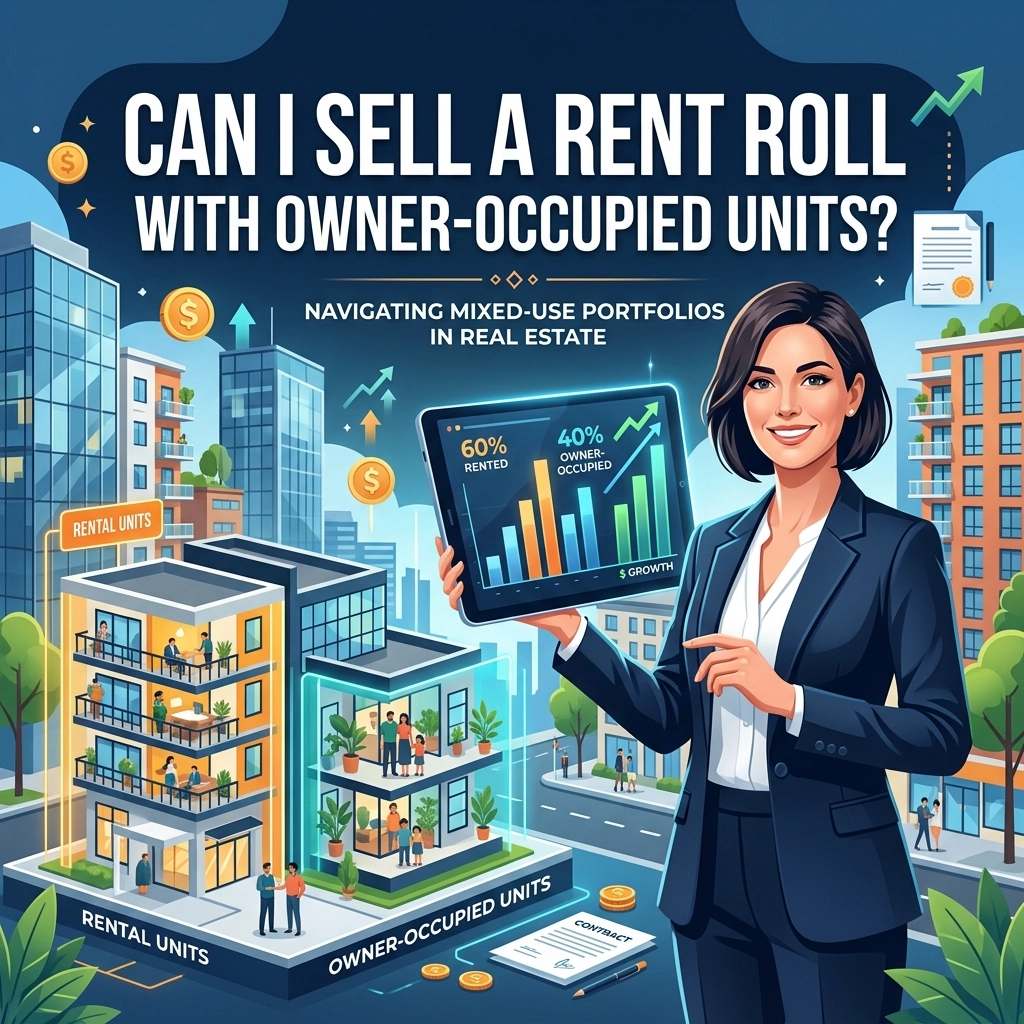
You have thirty doors under management, but you live in one of them. Or maybe you own a small plex, manage the whole thing through your company, but occupy the top floor yourself.
The question starts to nag at you: When I go to sell this business, does that unit count?
It’s a common point of confusion for property management owners who have blurred the lines between their personal residence and their professional inventory.
The short answer is: Yes, you can sell your rent roll even if it contains owner-occupied units.
But there is a catch.
The unit you live in isn't actually part of the "rent roll" in the eyes of a buyer.
Let’s break down why that is and how you should handle these specific units during a sale.
Not a Physical Asset, But a Contractual One
When we talk about selling a rent roll, we aren't talking about selling the dirt or the bricks.
We are selling the right to manage those properties and collect a fee.
Not the building… but the revenue stream.
A buyer is looking for a predictable, recurring income. They want to see a list of properties where a third-party owner pays your company a percentage of the rent every month.
If you occupy one of those units, you aren't paying yourself a management fee.
Because there is no fee being collected, there is no "value" to transfer to a buyer for that specific unit.
In a typical rent roll sale, a unit that generates $0 in management fees is effectively invisible to the valuation model.

How Rent Rolls Are Actually Valued
To understand why owner-occupied units are treated differently, you have to look at the math.
Most property management portfolios are valued based on a multiple of their Annual Management Fee income (AMF).
If your portfolio generates $200,000 in management fees and the market multiple is 2x, your business is worth roughly $400,000.
Now, look at your owner-occupied unit.
- Rent: $0 (or paid to yourself)
- Management Fee: $0
- Leasing Fees: $0
When the buyer runs their due diligence, they are looking for "clean" doors. They want doors that produce immediate cash flow the day after the closing.
An owner-occupied unit produces zero cash flow for the management company. Therefore, it adds zero dollars to the final sales price of the rent roll.
If you're curious about the specifics of these calculations, you can learn more about how buyers value a property management business.
The Distinction Between the Rent Roll and the Real Estate
Confusion often arises because owners think they are selling "the portfolio."
In your mind, that unit is part of the portfolio. In the buyer's mind, the "portfolio" is a collection of management contracts.
If you own the building and live in it, that is a real estate asset.
If you are selling your property management business, you are selling the service contracts.
If you intend to sell the physical building along with the business, that is a much larger transaction involving appraisals and commercial real estate brokers.
But if you are just selling the rent roll: the list of doors you manage: your personal residence simply doesn't fit on the spreadsheet.
What Happens If You Plan to Move Out?
This is where things get interesting.
Let's say you live in Unit A today, but you plan to move out once the business is sold.
You intend to turn Unit A into a traditional rental property and you want the new buyer to manage it for you.
In this scenario, that unit can have value.
However, you must be prepared to sign a standard Management Agreement with the buyer, just like any other client.
You will have to agree to pay the standard management fee (e.g., 10%).
Only then does that unit become an income-producing asset that a buyer will pay for.

The "Zero-Fee" Trap
Some owners try to include owner-occupied units in their door count to make the business look larger.
“I have 50 doors!” they say.
But upon closer inspection, 5 of those doors are owned by the seller and managed for free.
Not a larger business… but a less profitable one.
Buyers are savvy. They don't care about the "door count" as much as they care about the "revenue per door."
If you have 50 doors but 5 of them produce no income, your average revenue per door drops. This makes your business look less efficient and more cluttered.
It is always better to be transparent.
Exclude the owner-occupied units from your initial valuation and present a "clean" rent roll that shows exactly what the buyer will actually be earning.
Clarity wins every time.
How to Handle Owner-Occupied Units During Due Diligence
When you prepare to sell, you need to sanitize your data.
Not to hide things… but to provide a clear picture.
- Identify "Non-Arms-Length" Properties: These are units you own, units your family members own, or units where you aren't charging a full fee.
- Separate Them Out: Create a separate list for these units.
- Define the Future: Decide if these units will stay with the buyer as paying accounts or if they will be removed from the portfolio entirely.
- Disclose Early: Tell the buyer upfront. "I manage 45 third-party doors and 5 doors that I own personally. The valuation I’m proposing is based only on the 45 third-party doors."
This approach builds trust. It shows you know exactly what your property management business is really worth.
Selling the Business vs. Selling the Rent Roll
If you are selling the entire entity: the brand, the office, the staff, and the contracts: the owner-occupied unit still doesn't usually count toward the business value.
However, it might be part of the "overhead" discussion if the business is paying for the unit's expenses.
Most owners find it much cleaner to keep their personal residence completely separate from the business sale.
If you are selling a "Rent Roll Only" (just the contracts), the owner-occupied unit is simply a non-factor. It stays with you, and the buyer ignores it.

Why Buyers Might Be Wary
Even if you offer to stay and pay a management fee on your unit, some buyers might be hesitant.
Why? Because you are now a "sophisticated" owner.
Professional property managers are often the worst clients for other property managers. You know the industry too well. You might be more demanding or more critical of their processes.
A buyer wants "easy" doors.
Units owned by the previous owner can sometimes be seen as "high-maintenance" accounts.
If you want to include your units in the sale, you need to demonstrate that you will be a hands-off, cooperative client.
Facts Over Assumptions
It’s easy to assume that every door you "handle" adds value to the company.
But in the world of business brokerage, value is tied to transferable, recurring profit.
Not what it feels like it should be worth… But what a qualified buyer would pay for the income stream.
Your home is a place of memories and personal equity.
The rent roll is a machine that generates fees.
When you mix the two, you muddy the waters.
If you’re feeling the weight of managing your own properties alongside a growing business, it might be time to look at exit planning.
Final Thoughts for the Seller
Can you sell a rent roll with owner-occupied units?
Yes.
But you aren't selling the owner-occupied units themselves.
You are selling the other doors: the ones that pay the bills.
Keep your books clean. Keep your personal life separate from your P&L. And when it comes time to talk to a buyer, be the first one to point out which units are yours.
They will appreciate the honesty, and it will make the due diligence process move much faster.
If you’re wondering how your specific mix of properties might be valued by a professional buyer, it’s never too early to get a baseline.
Maybe you’re not ready to sell today. Maybe you’re just curious about what the future holds.
Either way, having the facts helps you make a strategic decision rather than an emotional one.
For a steady hand and a clear look at your options, feel free to reach out to us at Sell My PM Biz. We can help you navigate the nuances of your portfolio: owner-occupied units and all.